
 Free Delivery & Return
 365-Day Returns
 10 Million Happy Customers
 500,000 Products in Stock


Bed Sheets


Bed Sheets
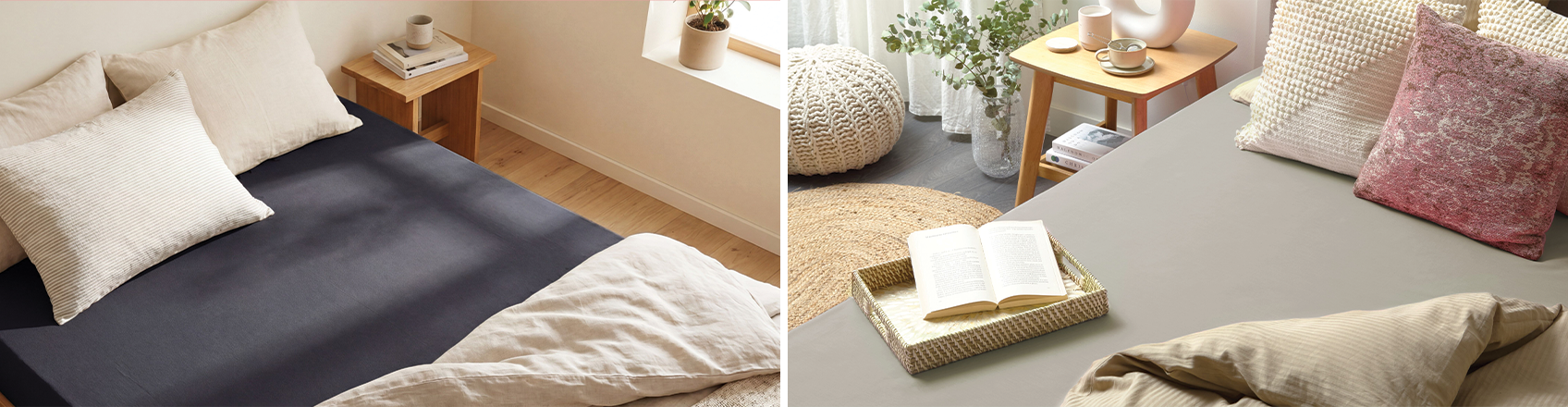
Bed sheets are an essential part of everyday bedding, helping to keep the mattress clean while creating a comfortable sleeping surface. They are available in different sizes, fabrics and styles, so it is worth considering the fit, feel and care requirements before choosing the right option for your bed.
How do you choose the right bed sheet size?
Choose a sheet that matches the exact width and length of your mattress, rather than relying only on labels such as single, double or king size, as dimensions can vary. For a fitted sheet, also compare the pocket depth with the full height of the mattress, including any topper. A pocket that is too shallow may slip off the corners, while one that is unnecessarily deep can bunch beneath you. Flat sheets need enough extra fabric to tuck securely under the mattress or drape evenly over the sides.
Which bed sheet material is best for you?
The best material depends on how warm you sleep and how you prefer the fabric to feel. Cotton bed sheets are breathable, soft and suitable for year-round use, while cotton-rich blends may dry faster and crease less. Linen has a textured feel and allows air to circulate well, making it useful for warmer sleepers, although it naturally appears more relaxed and creased. Microfibre sheets are lightweight, quick-drying and easy to maintain, but they may retain more warmth than natural fibres.
Should you choose fitted or flat sheets?
A fitted sheet is the more practical option when you want the fabric to stay securely around the mattress, as its elasticated edges reduce movement during the night. A flat sheet can be used over the mattress or between the sleeper and duvet, and it may be easier to fold and rotate because it has no shaped corners. Some people use both: a fitted sheet as the mattress layer and a flat sheet above it for extra protection and easier bedding changes.
What affects softness and sleeping comfort?
Softness is influenced by the fibre, weave and finish rather than thread count alone. Smooth weaves feel crisp or silky against the skin, while brushed fabrics provide a warmer, softer surface. Breathability is particularly important if you tend to overheat, whereas a denser fabric may feel more comfortable in cooler rooms. Consider how the sheet feels as well as how it performs after repeated washing, since some natural fabrics become softer with regular use.
How should bed sheets be washed and maintained?
Wash bed sheets according to the care label, as temperature limits and drying instructions depend on the material. Regular washing removes perspiration, skin oils and dust, while avoiding excessive detergent helps prevent residue from building up in the fibres. Tumble drying may be convenient, but lower temperatures reduce shrinkage and wear; line drying can also help preserve the fabric. Washing sheets separately from items with zips or rough fastenings lowers the risk of snagging.